Website Design for Chiropractors, Osteopaths and Massage Therapists: What UK Multidisciplinary Clinics Need to Get Right
Walk into most multidisciplinary clinic websites in the UK and you will find the same pattern. One homepage, one “Services” page, and a single paragraph each for chiropractic, osteopathy and massage, all sitting under one generic booking button. It looks tidy. It also ignores something important: the person searching for a chiropractor is in a completely different headspace to the person searching for a massage.
These are three different disciplines with three different levels of public trust, three different sets of questions patients are quietly asking before they book, and three different search behaviours. A website that treats them all the same ends up reassuring none of them properly.
This guide covers what each discipline’s pages actually need, what a well-structured multidisciplinary clinic site looks like, and the mistakes that show up again and again when chiropractic, osteopathy, massage therapy and physiotherapy get squeezed onto one undifferentiated template.
Why One Template Doesn’t Work for Three Different Disciplines
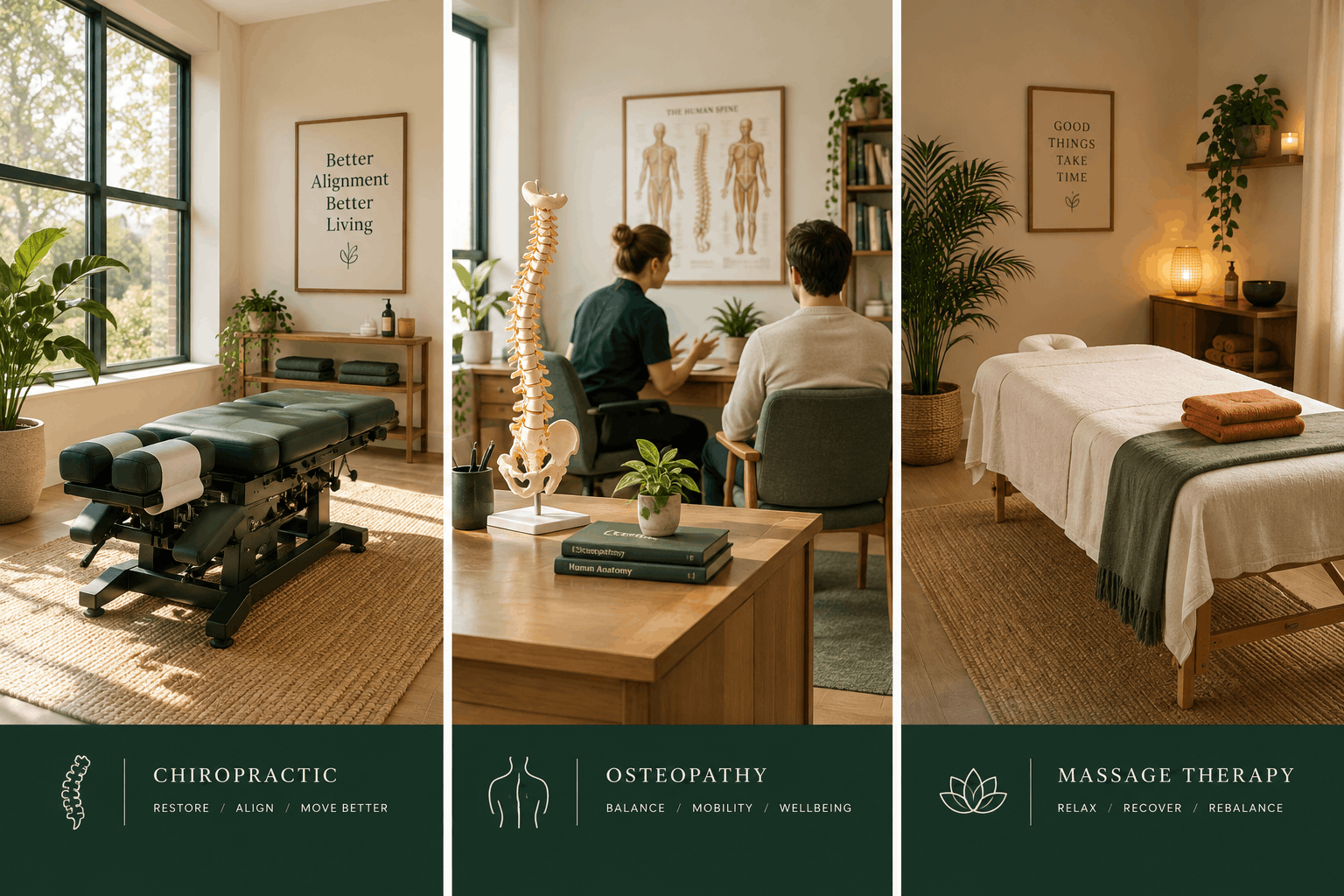
Chiropractic, osteopathy and massage therapy sit at different points on the trust and awareness spectrum in the UK, and that difference should shape how each is presented online.
- Chiropractic still faces more scepticism in the UK than it does in countries like the US or Canada. A good share of visitors to a chiropractic page are still deciding whether the whole approach is legitimate, not just whether this particular clinic is any good.
- Osteopathy suffers from a different problem: low public awareness. Many visitors genuinely do not know what osteopaths treat, or how the approach differs from physiotherapy or chiropractic. A page that jumps straight to booking loses these people before it has explained anything.
- Massage therapy tends to attract visitors who are further along in their decision. They already want a massage. What decides whether they book with you is professionalism, price, location and how quickly they can get an appointment.
Put all three behind one blended pitch and one “book now” button, and you lose the specific reassurance each visitor actually came looking for.
What Every Discipline’s Page Needs, Regardless of Type
Before getting into what makes each discipline different, there is a baseline every practitioner page should meet, whatever the specialism:
- A visible registration body badge and number, not buried in the footer. This includes the General Chiropractic Council (GCC) for chiropractors, the General Osteopathic Council (GOsC) for osteopaths, and a recognised body such as the CNHC or FHT for massage therapists.
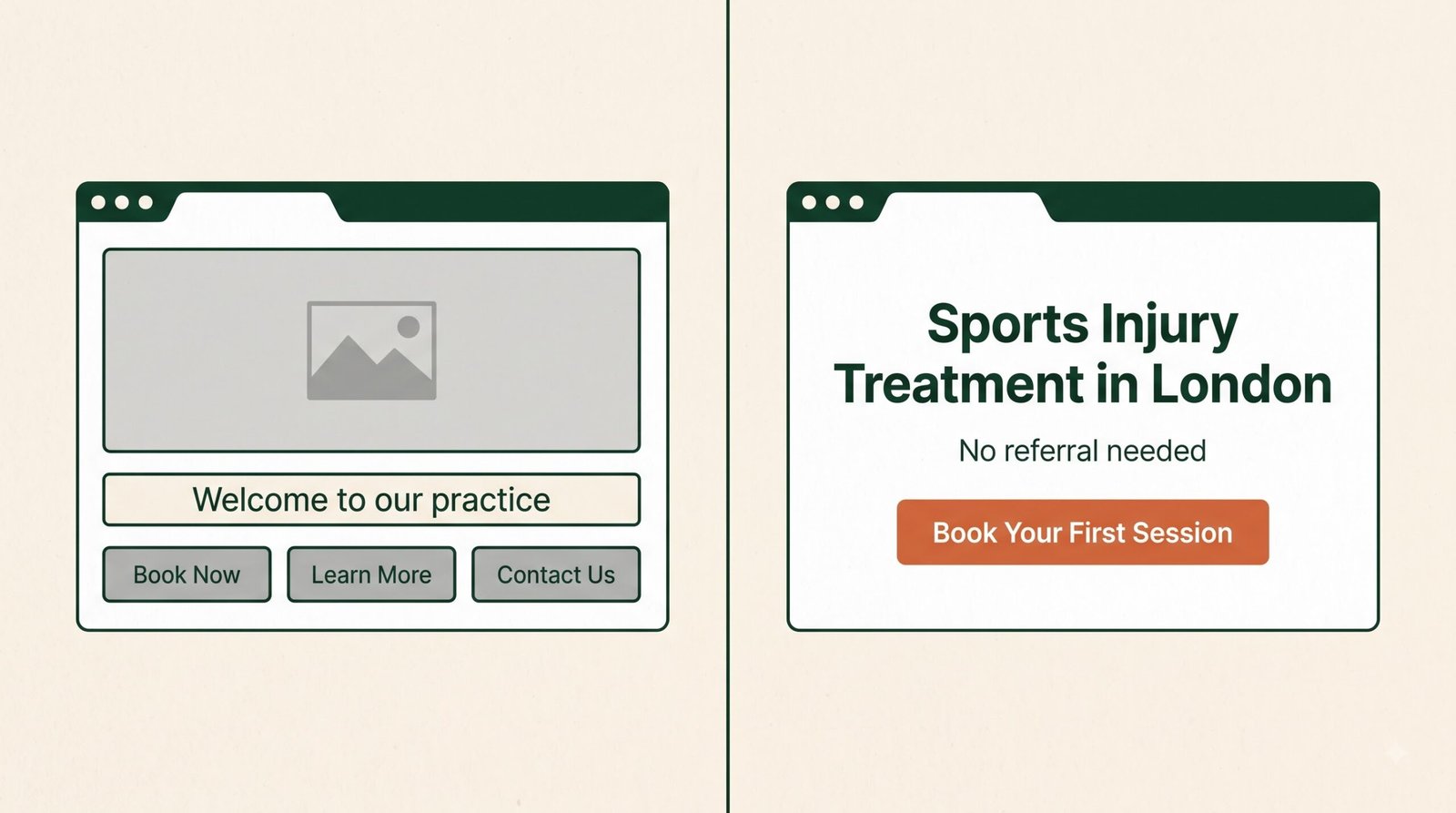
- A plain answer, in the first few lines of the page, to “what does this actually treat”.
- One obvious next step. Not three competing buttons for calling, messaging and booking online all fighting for attention.
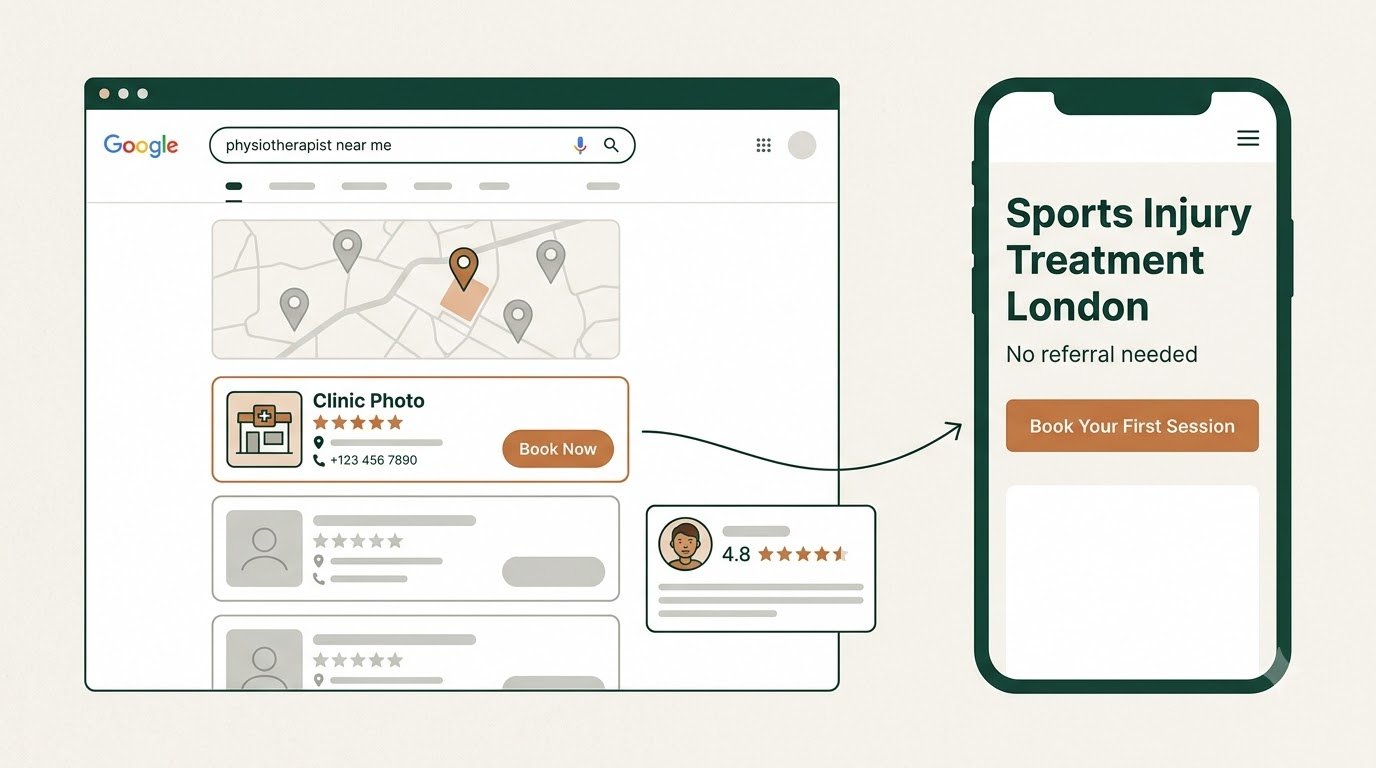
- A mobile-first layout. Most of this traffic is on a phone, often searching in pain, and a page that is slow or fiddly to use on mobile loses patients before they read a word of the pitch.
- Local signals that build trust fast: full address, opening hours, a link to your Google Business Profile, and the areas you serve.
- Real photos of the practitioner and the treatment space. Stock photography is one of the fastest ways to make a healthcare website feel generic and unconvincing.
- Genuine patient reviews, ideally grouped by discipline so a visitor looking for osteopathy is not reading reviews about massage.
Chiropractic Pages: Overcoming Scepticism Before Selling Availability
A chiropractic page has a job most other healthcare pages do not: it often needs to address safety and legitimacy directly before it tries to convert anyone. Visitors researching chiropractic care are more likely to search cautiously, checking whether it is safe or evidence-based, before they ever look at a specific clinic.
A few things matter more here than elsewhere:
- GCC registration must be visible. It is a legal requirement to be registered with the General Chiropractic Council to practise and use the title in the UK, and stating this clearly does real work in building trust with a sceptical visitor.
- Claims need to stay within what advertising rules allow. UK advertising guidance (CAP) restricts the claims chiropractors can make about conditions beyond the musculoskeletal, so content should focus on well-supported areas such as back pain and stick to evidence rather than broad promises. This is not just a compliance point. Overclaiming is exactly what damages trust with an already sceptical audience.
- A “what to expect at your first appointment” page removes a real barrier. A lot of hesitation around chiropractic comes from not knowing what actually happens in the room. Walking a first-time patient through the process in plain language does more for conversion than another list of conditions treated.
- Practitioner qualifications should be front and centre on the bio page, not an afterthought at the bottom.
Osteopathy Pages: Teach First, Then Convert
Osteopathy has an awareness problem that chiropractic and physiotherapy do not share to the same degree. Plenty of visitors land on an osteopathy page without a clear idea of what osteopaths actually do, so the page has to teach before it can sell.
- Open with a plain-English explanation of what osteopathy is and what it treats, in the first two sentences. Do not assume the visitor already knows.
- GOsC registration should be stated clearly, the same way chiropractors reference the GCC.
- Handle comparisons carefully. Rather than framing content as “osteopathy versus physiotherapy”, focus on what osteopathy specifically does well, its whole-body, structural approach, so the page reads as informative rather than competitive. Visitors researching options do not respond well to one discipline talking down another.
- Use the same first-appointment content pattern as chiropractic. What happens in the room is one of the biggest unknowns for a new patient, and explaining it plainly reduces hesitation.
Massage Therapy Pages: Professionalism and Proximity Decide the Booking
Massage searches tend to sit further down the decision funnel already. Someone searching “mobile massage near me” or “sports massage” in their town usually wants a massage. What decides who they book with is professionalism, location and how easy the site makes it to act.
- Professionalism and safety signals matter more here than for any other discipline on this list, because of the more personal nature of the service. Clear, specific descriptions of what each treatment involves, visible CNHC or FHT registration, and insurance details all help. So does a straightforward, unambiguous tone throughout the site, avoiding anything that could be read as suggestive.
- Pricing and duration should be visible without having to ask. Comparison shopping is common in this space, and hiding prices behind an enquiry form usually just sends the visitor to a competitor who lists theirs openly.
- Location needs to be obvious fast. If you offer mobile massage, say the areas you cover near the top of the page, not buried in a contact form.
- Booking should be the easiest of the three disciplines. This visitor is often ready to act now, so instant online booking converts better here than a “get in touch” form does.
If You Offer All Three Under One Roof
Multidisciplinary clinics have a genuine advantage that single-discipline competitors do not: the ability to refer a patient internally if a different treatment suits them better. The website should reflect that, rather than blending everything into one pitch.
- The homepage should not try to sell chiropractic, osteopathy and massage all at once. It should give visitors three clear paths in, so each one lands on the page built for what they are actually looking for.
- A short “which treatment is right for me” page helps visitors who do not yet know which discipline they need, and turns your cross-referral ability into an advantage rather than a source of confusion.
- Practitioner pages carry more weight here, because once a visitor has chosen a discipline, they are often choosing a specific person as much as a treatment type.
Common Mistakes We See on Multidisciplinary Clinic Sites
- One “Services” page listing everything in a few lines each, with no dedicated pages for any discipline. This means nothing ranks well, and nothing reassures a visitor who needs more than a sentence.
- No visible registration body badges anywhere on the site.
- Stock photography instead of real practitioners and real treatment rooms.
- No answer anywhere to “what actually happens at my first appointment”.
- Booking buried several clicks deep, or different booking systems for different disciplines with no obvious starting point.
- Reviews mixed together in one block with no indication of which discipline each review refers to.
A Simple Structure That Works
Most multidisciplinary clinics do well with a page structure along these lines:
- Homepage, with three (or four) clear entry points
- Individual pages for each discipline: chiropractic, osteopathy, massage, and physiotherapy if offered
- Individual practitioner bio pages
- Conditions or “what we treat” pages
- A “what to expect at your first appointment” page
- Clear, visible pricing
- Online booking
- An FAQ page
Yes. It is a legal requirement to be registered with the General Chiropractic Council (GCC) to practise as a chiropractor and use the title in the UK.
Both treat musculoskeletal conditions, but osteopathy takes a broader, whole-body structural approach, while physiotherapy tends to focus more on rehabilitation and movement following injury or surgery. Many patients benefit from either, depending on the specific issue.
Clear registration with a recognised body such as the CNHC or FHT, visible pricing and treatment duration, a specific description of what each treatment involves, and straightforward details on location and availability.
Yes, but only if each discipline has its own dedicated pages built around how patients actually search and what they need to know. Blending everything into one generic services section undersells all of them.
If you want a clear view of where your own site stands against these five principles, our free physiotherapy website checklist covers them in more detail, and our website design guide is the right next read if you are considering a rebuild.